_14297_34265589.png)


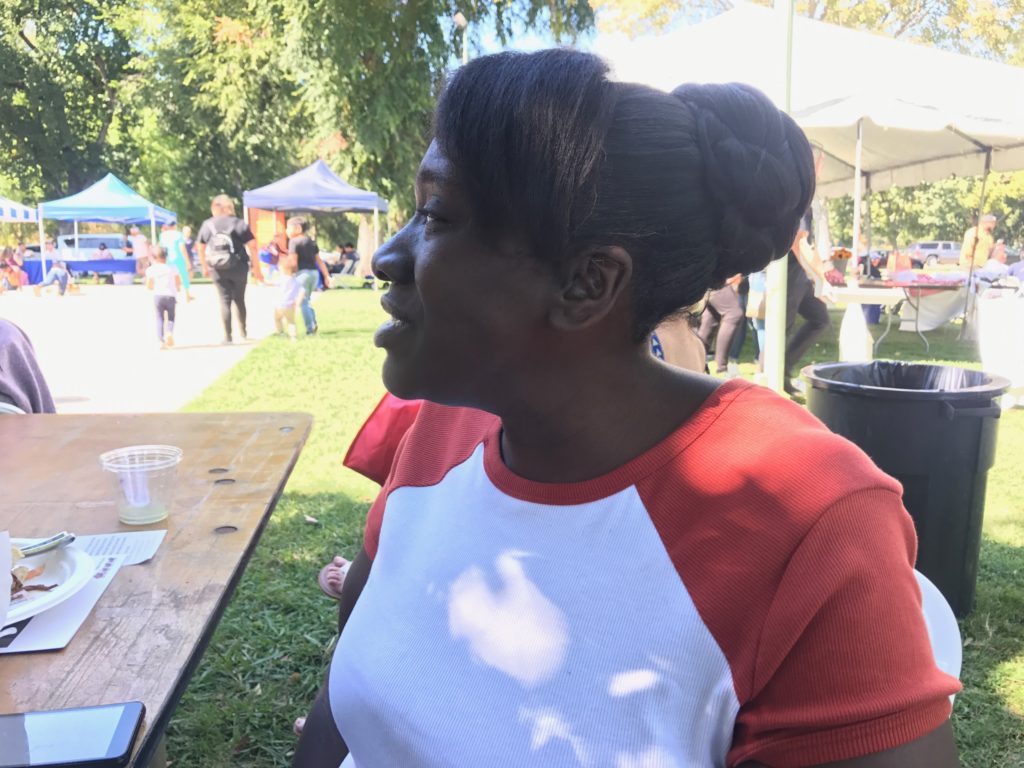
Hurting and suspicious when she first arrived at the Mutual Housing community in south Sacramento, Yolanda Foster has since taken a seat at the table. Her fellow residents now view her as a future leader.
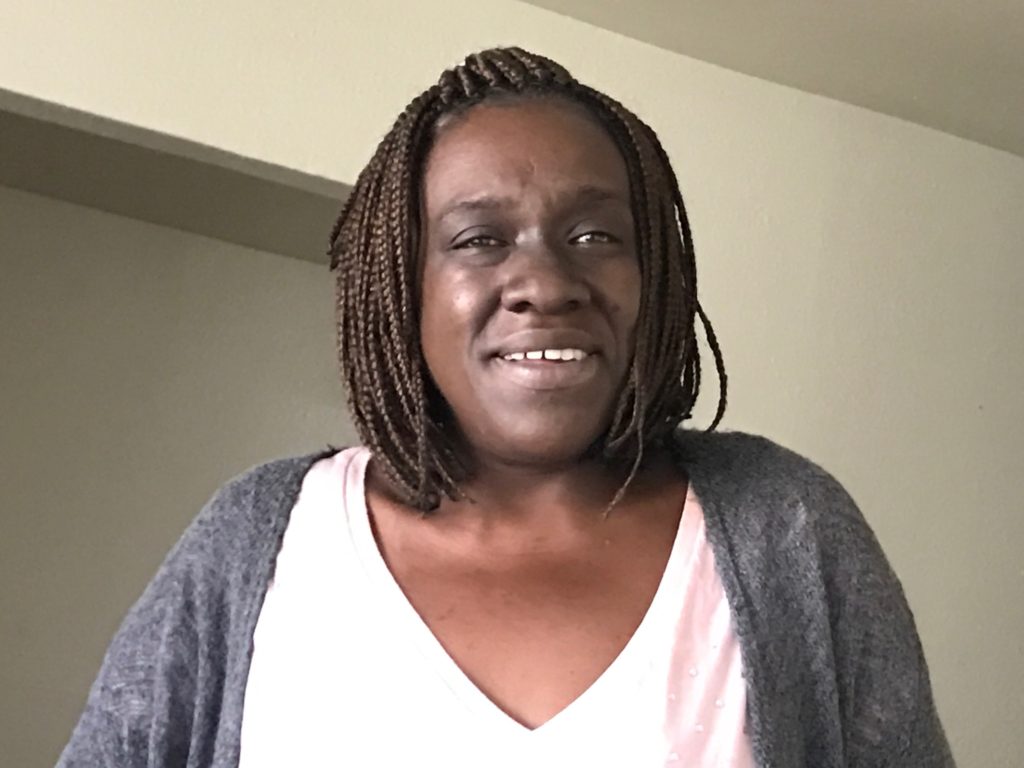
Three years ago, when Yolanda Foster got the call that there was an opening for a two-bedroom apartment at Mutual Housing on the Greenway, she was still suffering the after-effects of a stroke. She was sleeping in a van, with her kids living in a friend’s house. Her self-esteem had hit an all-time low. She needed sedatives and anti-depressants to get through the day.
“I thought I had lost everything,” Yolanda recalled. “I thought everything was gone. I was depressed, drinking a lot. I felt inadequate – I couldn’t protect my kids. I felt like less than a mother, really low – lower than dirt.”
In a fantasy world, this would be the place in the story where Yolanda Foster turns her life around and where her kids go on to get their Ph.Ds and find the cure for cancer and everybody gets rich and they figure out how to make peace in the Middle East.
The reality, however, is that three years after she moved into the Greenway, Yolanda Foster is only now beginning to really find her way.
It’s taken her almost that long to come to trust the people who help her the most – the other women in her circumstances who live in the Greenway, the ones who sit at the picnic tables near the front of the community, to watch the comings and goings, to support each other, to make the place feel safe, to instill a sense of power to each other and to everybody inside the gate so that they might be able to affect what goes on outside it, too.
Yolanda could still use a couch for her living room, and sometimes it’s a struggle for a single mother of four who relies on public assistance to come up with the money for household necessities as basic as toothpaste.
But one thing is sure and stable for Yolanda and the three children who still live under her roof –and that is that they have that roof.
“That is the major thing for me,” Yolanda said. “I feel as long as I have a roof over my head, I can go to the food bank or somewhere and make something happen. If I don’t have that housing, I’m stuck. Now, I have my family, and we don’t have to worry about being cold.”
More than just a roof, Yolanda Foster found a community when she moved into the Greenway in south Sacramento and its gathering of strong-willed female resident leaders, committed organizers and able managers. Yolanda said that living in the Greenway – one of 20 communities created and managed by Mutual Housing California, one of the Sacramento region’s most prominent nonprofit affordable housing developers – is the first time in her life that she has ever experienced anything like this sense of community.
“A lot of these women, they help me,” Foster, who is 44-years-old, said. “I don’t want to admit that I need it. I’ve never had that experience with other women before. They’ve brought me out of myself a little bit. I’ve come to take criticism, and a hug. Another resident told me we all go through things, that we all need help, but that you just have to be willing to accept it.”
Even if she still has to deal with the circumstance of poverty, Yolanda treads her path in her new community as a person who belongs. She also has gained a fresh understanding of how a stable housing situation improves most every other critical aspect of survival and success for her and her children.
In Yolanda’s case, the move into Mutual Housing improved her health in ways she never imagined.
“They took me off the Flexeril,” Yolanda said, about the sedative that she once used to help get to sleep. “And the Lexapro (an anti-depressant). I don’t take that anymore, either.”
For her kids, she said, the stable housing situation has provided them with a sense of safety and security in an uncertain social environment. It also has a foundation of support to her oldest daughter, Summer, as she pursues her educational dreams. Summer is enrolled in an Advanced Placement course at Kennedy High School, and she hopes one day to attend an historically black college of university.
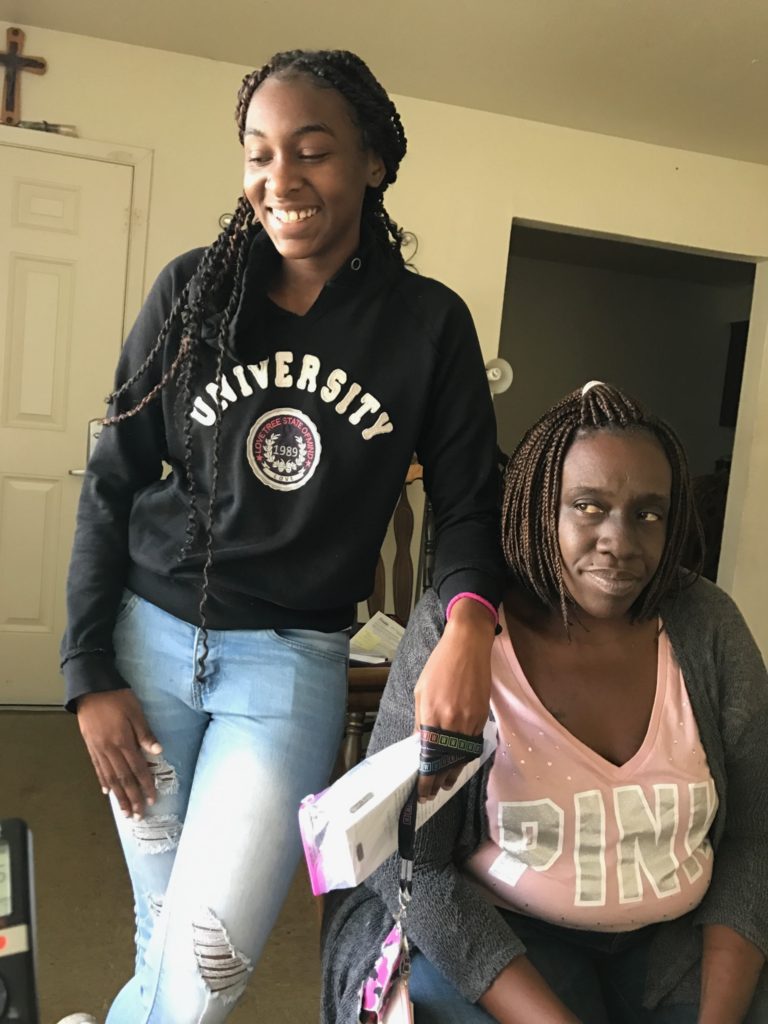
“Where we used to live (in North Sacramento), there weren’t many people around to influence me to do (school) stuff,” Summer said. “Once I lived here, there were more people in my ear pushing me toward higher education, and it became more of a reality to me that I could do this, that I could take these classes.”
With three teenagers in the house and an older son who is still trying to help find his way in the world, Yolanda’s thoughts and concerns in almost every conversation roll back to her children. They are still the prime focus of her life. She worries about finding a stable place for the oldest one to live, the best college route for her older daughter, and finding positive outlets for her younger daughter and son.
While they struggle, as young people do, to establish their footings in school and in life, Yolanda said that their chances of making the discoveries that will unlock their paths towards health and happiness increased greatly the day they moved into the Greenway.
“I was able to provide for my kids,” Yolanda said. “I was able to give them some stability. And instead of saying I couldn’t get them this or tell them what I couldn’t afford to do, I was able to save some money. My rent was cut in half. And I was using some of the money to get my babies some of the things they were asking me to get – hair supplies, and certain types of shoes. Nothing extravagant.”
In their new community, the staff and her new neighbors at the Greenway gave Yolanda something else that had been drastically missing in her life:
“They provided me with hope,” she said. “A lot of hope.”
Yolanda’s story began in Los Angeles, where she was born when her mother was on a visit from Houston. She was raised in Texas, moved with her family back to California, wound up in San Jose for a while, and about 10 years ago she followed a boyfriend to Sacramento where she rented a duplex off a back alley in North Sacramento for herself and her four children.
In her new town where she enjoyed few connections, it all nearly ended for Yolanda in 2011 when she suffered a severe stroke. She had been employed at a fast-food restaurant and was even able to take on second jobs. But she came out of the near-death experience unable to work and more poverty-stricken than ever.
She looked for a more affordable place to live, and she did get a line on an apartment through another affordable housing company. The arrangement fell through, however, after she gave notice on her old place. Forced to move and with no place to go, Yolanda found somebody to take in her kids. As for herself, Yolanda slept in a van.
On the edge of despair, Yolanda caught a break.
Two years earlier, she learned through a friend about the Mutual Housing communities, and she submitted an application to get into one. She’d been living in the van for a little more than a month when she got a call-back about an opening at the Greenway.
Handed the keys to a two-bedroom apartment, Yolanda was able to get out of the van and begin a new life with her kids.
In North Sacramento, Yolanda nearly fell into a panic every time her children walked down the stairs from their apartment into the alley behind their building. Transients in the neighborhood freaked her out about her daughters’ safety. Gang influences in the neighborhood made her son question his interests in hobbies such as the colorful, fantasy-themed Japanese-influenced art form known as anime and gravitate toward the streets.
“He never got involved in any kind of bad activity,” Yolanda said, “but he had to play that part to fit into the neighborhood.”
In the new neighborhood, one of the moms in the Greenway introduced Summer to interpretive dance. Another helped Yolanda put together a birthday party for her younger son and found him some yard work and other odd jobs to make a few bucks for himself, too.
Meanwhile, Yolanda’s new friends on the Greenway introduced her to Vietnamese food. Mutual Housing staff members made important connections for her at the local food banks. Her girls have taken part in female empowerment and educational programs. She plays Bingo and has taken cooking classes. She and her kids love the ice cream socials.
“Little things like that make it one of the best communities in Mutual Housing,” Yolanda said.
When she first moved to the Greenway, Yolanda said she felt uncomfortable at first around the women who had taken leadership positions on the local resident council, women who had engaged with the police and school officials on law enforcement and education issues, women who also make it a point to be seen in and around the complex to see who’s coming and going.
“Nobody likes to be told what to do or how to do it, but some of these older residents have been there and done that,” Yolanda said. “I listen to them, and they are awesome. They are always watching, and that is so freaking good, because it takes a village of people to raise children.
“It makes me feel good,” Yolanda continued, “to get a phone call, or a warning, about my kids, or somebody asking my kids, ‘How’s your mom?’ Sometimes it can be seen as nosy, but other times it makes me feel good. I get a phone call from one of my neighbors: ‘How are you doing, Miss Yolanda? I’m going to get coffee. Would you like to come with me?’ I’m like, ‘No, but thank you for calling.’ Or another woman will call and say, ‘I haven’t seen you in a couple of days. How are you doing?’ It makes me feel good.”
Charlene Jones is one of the resident leaders on the Greenway and also a member of the Mutual Housing Board of Directors. Charlene remembers the Yolanda who first arrived on the Greenway three years ago – walking with a cane, defensive, sometimes angry with her language.
“I would say that Yolanda has come a long way since she first moved in,” Charlene said. “We’ve had a lot of conversations. She has developed in a major way. She is more mindful of what she says and how she says it. I’ve seen great changes in her. She’s really grown.”
As her health improves, and as her children grow, Yolanda looks to the future and has begun to take some tentative steps towards rejoining the work force. As an SSI recipient, she is limited on how many hours she can work before her employment income affects her monthly grant, but she’s been able to work seasonally, and last year during the holiday season she served as a bell-ringer for the Salvation Army. This year, she’s applying for any kind of job she might be able to get at the Dollar Store.
Looking long term, Yolanda said she would like to enroll in a culinary program.
“I find a lot of joy in that,” she said of cooking.
She’s also becoming more and more interested in the daily activities of the Greenway, to the point where Charlene Jones sees Yolanda as a potential leader.
“She’s beginning to step up now,” Charlene said “Her eyes are opening to a lot of things. She’s very outspoken, very bright. She pays attention, and she doesn’t hold anything back.”
Kailaun Magee, the Mutual Housing community builder assigned to the Greenway, described Yolanda as a woman who is “in a place of growth” who in recent months has been able “to break out of her shell.”
“She’s very focused on bettering herself and trying to make a positive impact insider her community and outside her community,” Kailaun said. “I do see a possibility of her growing into a leadership position. She is on that path.”
Beyond the Greenway, Yolanda is discovering a growing interest within herself in the way society works, in going to government meetings like the recent City Council session on the economic future of Stockton Boulevard, in learning the role of politics and the importance of voting, in studying the issues, in empowering herself through activism.
“I always had an interest,” Yolanda said. “I just didn’t believe in myself. Honestly, being in this community, the women there are something else. They take the initiative to get involved and know what’s going on around our area. They pushed me to get involved with what’s going on with our kids and the community inside and outside the gate. A lot of women told me I need to know what’s going on with their schooling and I need to know what’s going on in our surroundings. So I’ve become more active in school stuff, and I honestly would not have done any of it, in any of the community stuff, had it not been for some of the residents and the place there.”
Charlene Jones remembers Yolanda’s first months at the Greenway, when the newcomer would all but sneer when she walked by the picnic tables in the front where the women gathered, exuding a sense of suspicion of what they were talking about. In more recent months, Charlene has noticed, Yolanda has begun to stop at the table, to sit down and take part in the conversation.
“She’s beginning to understand,” Charlene said, “that she, too, can make a difference.”