_14297_34265589.png)


The unfortunate fact about our free market system is that sometimes it doesn’t balance things out, and nowhere is this shortcoming of supply and demand more apparent than when it comes to housing and jobs in California.
In a perfect free-market world, developers would build homes and employers would provide jobs that paid people enough money to buy or rent them, with cash left over for a working family to enjoy a night out a couple times a month to go out to dinner or see a movie or catch a baseball game.
While the free market might work well for some, and maybe even for most people, the numbers tell us that when it comes to jobs and housing, it certainly is not working for all. According to the U.S. Census Bureau, nearly 60 percent of California renters pay more than a third of their income to their landlords. For homeowners, even 40 percent of them have been defined as “cost burdened” for paying more than 30 percent of what they make on their mortgages.
That is what you call an imbalance.
There are plenty of international economic explanations for why the incomes many people earn from their jobs and the amount of money they have to pay for the roofs over their heads are out of whack. There are a lot of excuses, too, in a state where housing supply has fallen short by anywhere from 2.7 million to four million units, according to experts such as the state Legislative Analyst’s Office.
Whatever the explanation, or the excuse, the fact remains: in California, the high cost of housing propels the state from having the 16th worst poverty rate in the country to being the absolute number one when supplemental factors are worked into the equation. Chief among them: the cost of housing.
Fortunately, something can be done to smooth out this rough edge of the free-market system and provide high-quality affordable housing at the lower end of our state’s income spectrum.
That is where Mutual Housing California comes into focus.
In the year that we celebrate our 30th anniversary, we have grown into one of the largest nonprofit affordable housing providers in the Sacramento-Yolo County area — and the only one that originated from within the region. At our 19 properties, we house 3,165 people in 1,071 units, and it is these residents whose lives tell the story of the value of – and the need for – affordable housing. In good neighborhoods. Close to where people work.
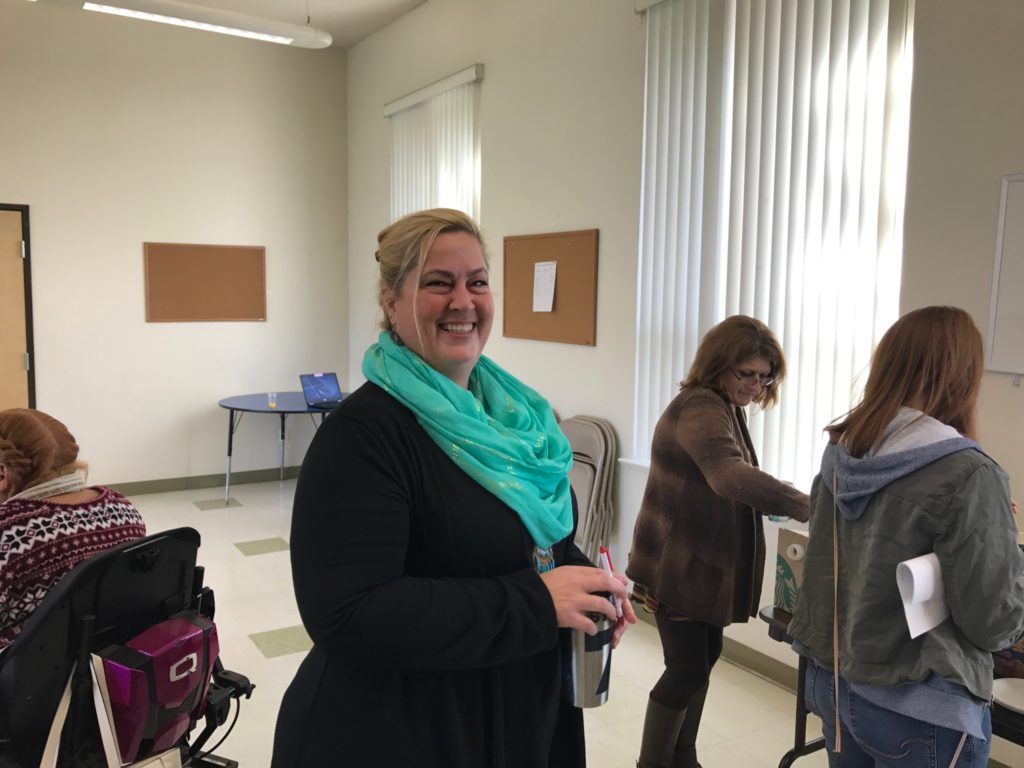
Jen Higley-Chapman, for one, lives in the Moore Village Mutual Housing Community in Davis. The tidy little 59-unit multi-family community is located in the middle of the massive Wildhorse subdivision on the northeast side of town, where six newly-constructed single-family homes located less than 500 steps from the Moore Village entrance recently went on the market and sold in a matter of days for $1 million each.
A special education professional for the Davis Unified School District, Higley-Chapman earns an annual salary of $26,000. Thanks to her nonprofit landlord, her two boys were able to attend the highly-regarded Davis public schools. She lives close to where she works and thereby eliminate a long driving commute that would take a bigger chunk out of her salary. She has developed relationships with her co-workers, civic leaders, and the wider community that would not have been possible if she had to spend so much time driving to and from work. She is able to participate at a greater level in the decisions that affect her life and her community.
“I just wouldn’t be able to live in Davis at all if it weren’t for affordable housing,” Higley-Chapman said in an interview. “I wouldn’t be able to be part of the community where I work. I think people take it for granted how hard it is to do that if you aren’t making a lot of money – and most people who serve the community like school teachers, firefighters, police officers, and waiters and waitresses might not be making enough money to afford to live there.”
The considerable majority of our resident households – 61 percent – are made up of the classic working poor. The adults in these households either work fulltime for somebody else, or they have managed to eke out a livelihood through their own self-employment, or they work full or part-time but still need some form of public assistance to make ends meet. Forty percent of our residents are children, under the age of 18, and another 21 percent, it should be noted, had worked enough over the course of their lives to list Social Security as a key source of their income.
Every day, our working residents go out into our economy to do their jobs, many in the service and agricultural economy. Yet, when they sit down at the end of the year, they total up an annual average income of only $15,100 per adult. This accounts for the fact that 52 percent of our residents, including many in this group who are employed, live below the poverty line, as classified by an income level of less than $25,100 for a family of four or $12,140 for an individual.
Since our inception in 1988, Mutual Housing California has invested over $100 million to renovate previously substandard properties or build entirely new communities. We build and manage them with an idea to improve the lives of our residents, not just to provide them with a place to live. We introduce them to the importance of digital literacy. We help them to become community leaders. We work with our families to create a culture where all of their children grow to believe that they can go to college and earn the incomes where they will be able to afford to live near the best jobs in the state.
As a nonprofit corporation, Mutual Housing is able to provide our residents with high-quality, safe, one-, two-, and three-, even four-bedroom apartments at rates that they can afford. Thanks to the foundations that support us, as well as contributions from our private donors, our corporate sponsors, the government agencies who provide low-income housing tax credits, and the financial institutions that invest in them, we plan to open our 20th community in the spring – a positive-net energy development in Woodland that will house farm workers whose labor helps feed us all but whose wages oftentimes don’t add up to what they need to pay the rent on a decent home.
We also are working towards beginning construction on two other properties in Sacramento, one that will be marketed with LGBTQ older adults in mind and the other to house the homeless mentally ill.
With their crucial housing needs stabilized, Mutual Housing residents gain the luxury of being able to turn their attention to other aspects of their lives that are aimed at increasing their income. They are able to focus on their children’s education. They can participate in programs that enhance their employability. They are able to engage in community decision-making and work with their neighbors elsewhere in the city to make a difference.
It’s no secret where our residents would be if it were not for Mutual Housing. We know that a good two-thirds of the residents who now live at Mutual Housing at the Highlands were formerly homeless – sleeping along the river, or on the sidewalks downtown, or on the loading docks of the warehouse district north of downtown. We know that the 164 people who live at Mutual Housing on the Greenway would otherwise be residing in the ratty, roach-infested apartments that the complex used to be before we took it over and rehabbed it into a model of affordable housing and allowed its residents to become effective and dynamic activists in the wider south Sacramento community. We know that the farm workers living in our zero-net energy, award-winning Spring Lake community in Woodland would be doubled up with other families in apartments or living in converted garages or in lean-tos in the fields.
For everybody who lives in our communities, we know that they would be paying upwards of 70 percent of their income for their housing, regardless of where their jobs are located. We know that they would otherwise live under the constant fear of a financial disaster such as a layoff or a health-care emergency that would force them out of their homes. We know that the affordable housing we provide cushions them from economic shock.
Yes, it costs money to build affordable housing. But the housing that we provide – the housing that makes us better as a society and provides for a stronger economy, the housing that solves what had been the biggest problem in the lives of the more than 1,000 families that live in our communities – we know that it is durable. We built it to last. Over time, the financial resources that are required to raise our communities from the ground up become more and more cost effective.
We also know that within six years of moving into a Mutual Housing property, the average Mutual Housing family moves out – their children healthier and better educated, the adults empowered, and all of them moving forward with the confidence that comes from successes that were based on having the problem of this most basic necessity of their lives solved.
We at Mutual Housing California are happy that the free market can provide terrific homes for people who can afford them. We agree that developers who build quality single-family homes and apartments deserve a fair rate of return on their investments, and we do not begrudge the residents who live in these communities of their enjoyment.
We also believe – and we have made it our mission – to make sure that low-income families get the same kind of opportunities to enjoy the benefits of the free-market economy that have been bestowed on others whose life circumstances have been more fortunate. And that begins with making sure they have safe, clean, and affordable places to live, no matter what part of town they live in or how much money they make.