_14297_34265589.png)


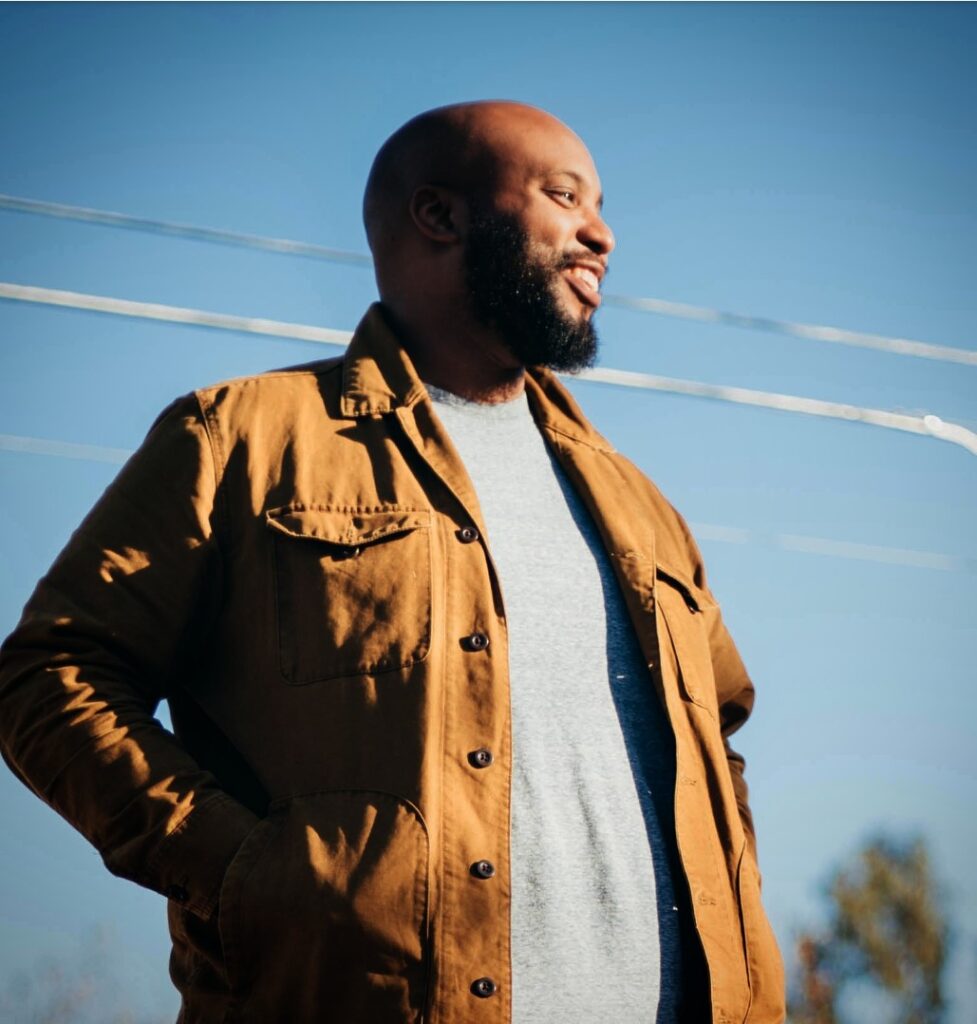
It took a few weeks to count all the votes, but when they finally got tallied, former Mutual Housing California community organizer Chinua Rhodes eked out the victory and found himself elected to the Sacramento City Unified School District as its Area 5 representative. Chinua, 36, is a proud resident of south Sacramento with strong family connections: his father was a community organizer, his grandfather was the first Black director of a statewide governmental agency, and perhaps most importantly, his five children attend or about to attend Sacramento city schools. He says his work as a community organizer for Mutual Housing from November 2017 to May 2019 helped lead him into running for office and becoming an elected community leader. He was interviewed by Mutual Housing communications consultant Andy Furillo.
Chinua, it seems like equity is at the center of everything you do. How do you define the problem? What do you envision as the solution, in education and everything else?
One of the things that I’ve been able to see on the ground floor is that sometimes we talk a lot about equity, in theory, and not necessarily equity in action. We’re talking about kids going back to school during the coronavirus, right? And they say, hey, we need to get kids back in school because some of these kids don’t have a place to go, and school looks like the only place that they had to go. And I say in my head, well, before COVID-19, those same youths still had no place to go a lot of the time. So, when we’re talking about opening our schools because these kids have no place to go, and if the reason is equity, then we have to talk about turning our schools into community hubs when everybody’s healthy, too. Our schools should act more like community centers, but they’ve been shuttered off to our communities and their families at certain points during the day. We should have city-school partnerships where we’d have open school yards and joint use agreements between the Department of Parks and Recreation and the school sites, to utilize schools as parks and play stations and open spaces. We should be looking at that as well. We’re not doing all those things collectively. We’re just saying, “We’re about equity,” but we’re not actually pushing forward toward the equitable society that we think that we are. The Sacramento school district should be looking at all of our policies to see how they impact the most marginalized groups in our district. That should be our real north star.
Keeping school yards open at 3 o’clock, the city-schools partnership, that’s getting to the heart of the equity issue for you?
Right. We’re also talking about building a community school model. Community schools are talking about youth development, and social health, and mental and physical health. You’re talking about having these things available on school sites and partnering with groups to make that happen. Like with Mutual Housing – I think it’s great the way they have wraparound services at their facilities, when you talk about the Highlands and what they’re talking about building on Stockton Boulevard. And school sites should have those same things. Mutual Housing doesn’t have a health or a mental health department, but they do partner to make sure they have those things available on site for their residents. We could do the same thing and look at those things at school sites. What if the school district had health clinics on site, when we open back up? You’re talking about cutting down on kids missing school and absenteeism. A lot of times people don’t have like Kaiser or some center where they go and see a doctor. Sometimes they’re going into clinics, and you sometimes have to sit at the clinic all day, so you don’t’ have the opportunity to have someone watch your kids or have transportation or things like that. You have to take the whole family to the clinic. So, we have to start thinking about our school sites, and not just the interior educational barriers, but the outside barriers to our families’ education and our youth’s higher education.
Mutual Housing views housing as being at the center of the equity issue, that you can’t really focus on employment, or education or health care or much of anything else until you get the housing situation stabilized. On the school board, do you see a place where housing and education can meet in terms of bringing equity about?
One hundred percent. At Mutual Housing, I saw how a lack of physical space stability, not having a place to lay down, how when you have a lack of housing stability, you have a lack of stability in your educational outcomes. You have a lack of stability in your financial outcomes and your jobs. You have a lack of general stability in your health and safety. All of that comes into question without safe and affordable housing. And so you look at our school district and you see that we have some homeless youth who are actually in our school system now, and we have a whole lot of youth whose families might not classify as homeless but they don’t have stability in the home, or they’re living in a car, especially due to COVID. We’ve seen the studies that show when families are housed, their educational outcomes raise exponentially. I also think we should look at building teachers and staff housing in some of the old schools that are no longer in use. We’ve seen that they’ve done that in San Francisco and a couple other places in Northern California. I think that maybe we can build some partnerships between the city and schools and Mutual Housing and other housing nonprofits to do that kind of work. I think that’s the next step. Can you imagine having teacher and staff affordable housing within the school districts, so that teachers could live in the areas where they teach, with the district actually being able to provide those things and have longevity with their staff and teachers and the general community? I think it would be a beautiful thing, and I think we can do it long term.
How did your time at Mutual Housing help shape you as a candidate?
I think Mutual Housing helped me to connect with different people with different opinions and different social and economic backgrounds and different political views and to work with a different variety of people toward the same goals. It helped me to understand how hard that is, but also how rewarding it can be. I worked at Norwood, the Westerner, and Sky Park, in North Sacramento, the South Sacramento area, and almost to Elk Grove. Each community was vastly different. Totally different. Totally different populations. Totally different concerns. Totally different worries. And totally different angst and gripes. It made me realize the need to build coalitions and to collaborate. If I didn’t have the experience I had at Mutual Housing for those two years, I wouldn’t have become the candidate that I came to be. Mutual Housing was pivotal in me being a competitive candidate who was able to really go deep and talk about the issues because I was able to directly work with a broad base of people. In campaigning, you might think the south area is just one thing, but you can go to Golf Course Terrace or Detroit Boulevard and those are completely different neighborhoods with completely different demographics. To be able to connect, understand, and build coalitions on a shared vision and a shared definition of what that vision is, to be able to move forward – I learned how to do that at Mutual Housing.
As somebody who attended Sacramento city schools, what was the main impression you took away from them and the district, about what the schools did for you – or to you, whatever the case may be.
In all honesty, I have so many great memories and had so many great teachers. One interesting thing, I had attended Bret Harte Elementary School as a kid, and when I got out of college I got a job as the director of a grant program there, where I serviced 199 kids. And I went back to work there, I worked in what used to be the principal’s office. When I used to get in trouble in elementary school, I used to have to sit in that office when they called my parents on me. And now here I was working in the same office that I used to get in trouble in. Mostly, though, I saw the same teachers still working at the school from when I was a kid, and the same custodians, the same people. So, one thing I took away from the Sacramento school district is that we have dedicated staff, dedicated professionals who love their jobs and love their schools. But I also learned that at the same time, the district was very separated. In high school, being on the football team at McClatchy High School, a group of us were walking down the hallway one day to go see our computer science teacher, about 10 or 15 of us, African American males, big guys, all on the football team, and I remember the campus guards and the security guy all ran and surrounded us, and they’re like, “Where are you guys going? Everybody stop.” And we were kind of confused with what was going on, and at that moment I was like, oh, maybe somebody did something, I don’t know, and literally – they checked us all, so that we could not be walking in groups, and we had to disperse, and we didn’t really know why. As an adult, I now know that 15 African American males walking down the hallway are seen as a threat, and we also see those same issues, when we look at the African American suspension rate, and we look at the graduation rate, those are systemic things that you’re not aware of until you’re able to put words into that. So, these are things we still have to work on, broadly, and not only for African American students, but also for Latino students and Native American students and for students with disabilities. We have to work on those unspoken but known things. I learned that teachers are the heart of our school district, and they love and care for students, but I also learned about the inequities of what you look like can impact you, in positive or negative ways. I know that we can rise above that, because I’ve seen the good in our community, and there is way more good than there is bad.
You’ve paid your dues – you were on the city Parks and Community Enrichment Commission and the city Inclusive Economic and Community Development Investment Committee. When did you first start thinking about running for school board?
Probably late 2018. The only reason I started thinking about it, I was constantly doing organizing work, and a lot of the time I was pushing for things to happen. We were constantly pushing somebody to make a decision, and I was like, man, if I could hear these voices, I could vote yes on this. Through all the organizing, we learned how to work in systems. Sometimes we don’t learn how to actually run for office, to be in that position to change systems. That’s when I started doing the best thing that I knew how to do from organizing, which was one-to-one meetings. You meet people. I started asking a lot of questions. You hear a lot of different things, but it comes down to what do you want to get done, and do you think that you are the person who can bring people together, who can make change? If you think you have that and you want to put yourself out there, you put yourself out there. But it’s a hard road. Campaigning is wearing. You get tired. And then you have to go in and govern, and that is a totally different ballgame.
Your grandfather, Herbert Rhodes, was the state’s parks and rec director. And your dad, Dennis Rhodes, was an organizer with PICO California. How did they shape you?
My grandfather was actually the first African American person to hold a state government department’s executive seat in the state of California. He was in there in the 1970s. The craziest part, I didn’t know it until I was a Parks and Rec commissioner. I told my grandfather, yeah, I just got appointed to the parks and recreation commission in the City of Sacramento, and he said “Oh, yeah?” And he told me about how he had worked under Jerry Brown, and they were doing this and that, and it was funny – as a young child, we’d go to like the State Fair for free, and I thought it was because my grandfather was an Army veteran, and I realized later that it was because of his state government position that he had these perks. What he instilled in me was to always care about your community, and to have a hard work ethic. My father, with PICO, he showed me the power that everyday working-class people have to move things for the betterment of the general public, and that everyday people were really the heart, the key to a city’s success. He worked to make it so that the city gave free bus passes to school kids. One time I got suspended from McClatchy for like a week for showing up late to school too many times, and my dad had to come to the school, and he said, “I don’t understand. My son was late to school, and now you’re going to suspend him so he can’t come to school? That doesn’t make any sense.” And then they changed that rule that allowed me to come to school. Stuff like that all wrapped into his own lived experience, what he saw, what he thought needed to be changed, and I saw that as an everyday citizen and individual, you have power to change things, and I learned that through my father.
The Sacramento City Unified School District, of course, is facing enormous financial problems, and there’s a chance it might even get taken into receivership by the state. I guess the question to you is, what you have you gotten yourself into?
When people found out I was running, they were saying, “Hey, man. Are you crazy?” But here’s the thing: I didn’t run just to run, to have an office. I have five kids, four who are in the district, and one who will be in the district next year. So I understand a couple of things. I understand we have to make sure we don’t go into receivership. Because communities like mine, and working people, a lot of times we don’t have the option to go to a private school. We need to make sure that our district doesn’t go into receivership. Receivership is not going to help anyone. It’s going to be cut, slash and burn with impunity, and the community won’t have a voice, your board members who you elect won’t have a voice, and it’ll change outcomes even more for the south area, for the north area, for all socioeconomically disadvantaged areas. They’re going to be hit very hard. I know I can build coalitions. Right now, we need a coalition builder who is not part of the previous troubles and issues and fights, and who can come in and work. I think that was really shown very strongly in my campaign, that we were able to get endorsements from the teachers, SEIU, local labor. I was also able to get endorsements from current board members. My great hope and goal is that we build coalitions around a shared vision, a shared goal on outcomes, and that we find out how do we do that together, without placing blame. I feel everyone is culpable for what happened, and now we have to find out how we all move forward together. Those types of hard conversations are not easy. I expect to have them, with the new blood that is coming in.